


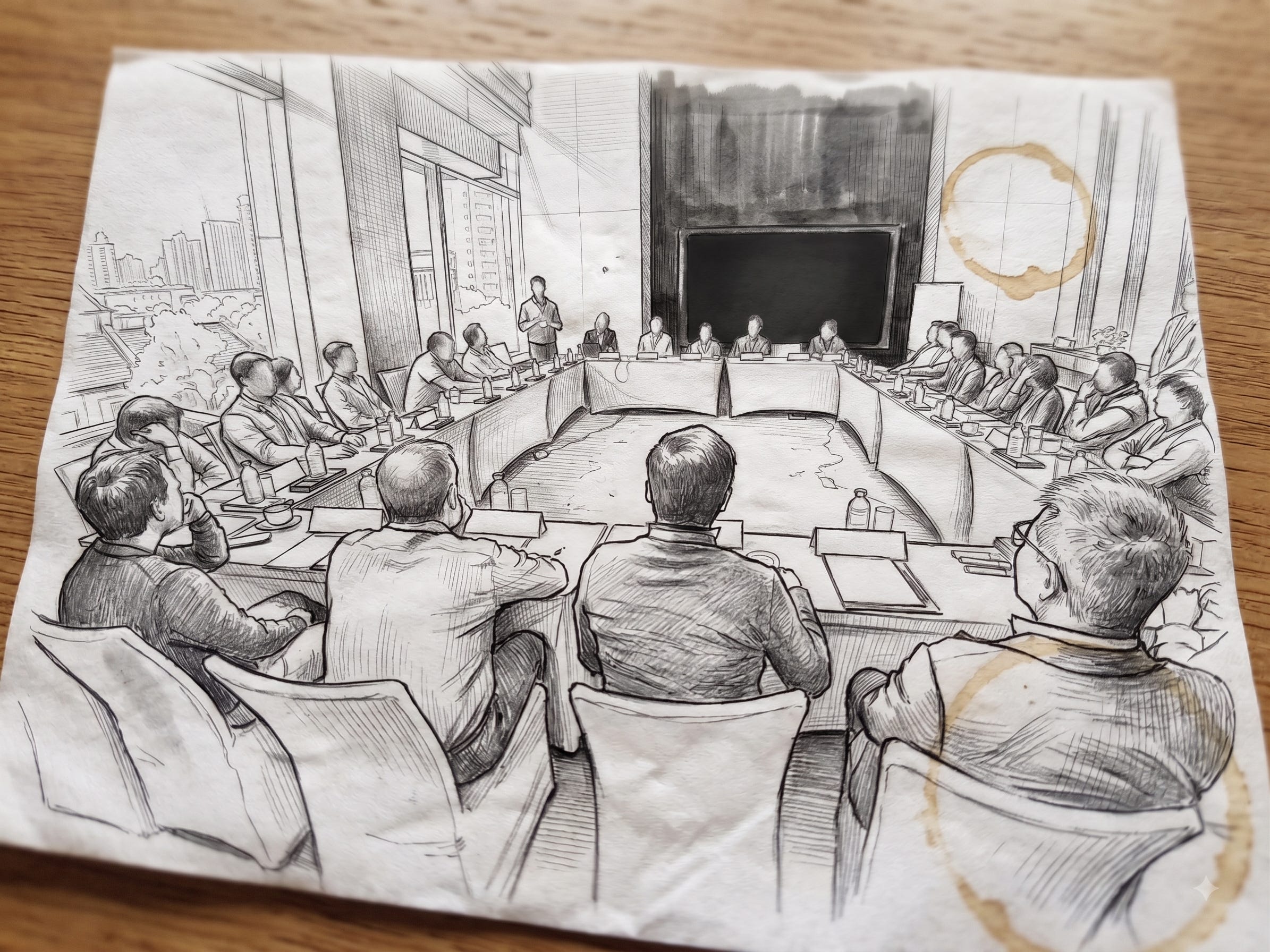
When most people think about what makes a programme tick, they think about the agenda and structure, but ultimately, a programme is a stack of meetings, and a meeting is a stack of sessions. The session is the core unit to work on each time. If the session is dead in the water, then the whole thing falls apart. One has to get obsessive about every single session.
So let’s start unpacking the session’s inputs and ingredients (i.e., people and ideas). It’s a bit like what differentiates one chef from another. How you bring all the ingredients into the mix at the right timing. I’ve always found that good peer exchange sessions have perspectives put together in a way that is structured and coherent yet also improvised and surprising to keep it fresh and interesting.
The mantra I always have with running a good programme is: “you’re only as good as your last pizza.” The pizza is the session. You can run the best programme with good reputation and engaged members, but if your last session was a dud, everyone remembers.
Over the last decade in Shanghai I ran between sixty and eighty meetings a year, and a single meeting might hold as many as four sessions. That is enough “rinse, repeat” learning moments to see the patterns. It’s a continuous improvement where you always want to get to a better meeting, onwards and upwards every time. This article is a first attempt to put that experience to paper.
Let’s start with the different sizes of sessions. There is the small meeting with 8-12 in the room, the medium-sized exchange with 25-30 in the room, and the large exchange which goes between 35-50. A peer exchange or expert exchange of any form is one where many-to-many communication happens and at least 50% of the room has said something. Otherwise, it’s broadcast, and then you can organise events between 100 or even 1,000 people. It’s just a different format.
Keep it human, don’t perform mechanically.
Don’t stick to meeting format templates. That’s overly cautious. A peer group exchange is closer to theatre than to a lecture or a Microsoft Teams project status meeting. You have a running order, a cast, a room to engage, and several predetermined and improvised facilitation decisions.
Once you see it that way, the format options open up. A classic presentation followed by Q&A. Or you lead the whole thing around two or three member commentators and bring in a domain expert afterwards as a reflective perspective. Or you open with a five-minute framing off the cuff, followed by improvised group dialogue. You can open up with a case study with all its rawness and novelty, to unpack it afterwards or vice versa. There are many ways to run a session, so experimentation is also part of the journey to expand your repertoire while keeping in mind the specific context around each session:
Where is it inside the programme?
Who’s in the room?
How does the topic require a particular type of treatment?
What was any feedback given before that moment?
Guest speakers can be useful and risky
Expert perspectives often fill the gaps the members are seeking. Yet it’s a delicate balancing act between what the guest wants to say and what the members actually came for.
For example, a partner from a Big Four firm was speaking to a group of executives on post-M&A integration. He had a beautiful 50-slide deck, which he promised he’d go through quickly. During our briefing lunch, I suggested he present slide 49. Slide 50 was blank with a “thank you” on it anyway, so that could be deleted. Slide 49 had the ‘10 do’s and don’ts’ of post-M&A integration. Slides 2-48 didn’t have to go into the bin, just moved to the appendix, to be flicked on screen if it was needed to reference any points during Q&A, unless I wanted to segue entirely into group dialogue, depending on whether the room wanted more clarifying questions or more experience-sharing among the participants. This is more applicable with thirty in the room than in a boardroom of twelve. Cutting his presentation down to a single slide cost him nothing and made him look better.
In a peer group session, you want to get straight to the gist of it. The expert is not the product. The peer exchange between the members is the product. You don’t want the guest speaker to make it seem you just provided more distribution for their platform.
A guest speaker can take different roles in the session. They can be:
Someone sitting in the room as a commentator, expected to be called upon
Someone who leads part of the session at the start, or comes in later with their perspective
A co-chair or co-moderator, given real authority to take charge of the session
Facilitating with “imposter syndrome”
You do not always have the expertise the session requires. I ran finance sessions without being a finance person, and they worked, which surprised me at the time. Two things made that possible.
The first was a mental model my mentor gave me. Imagine the session is your living room, and these are your guests. That’s all. Once I held it that way, I was comfortable, because hosting is something I know how to do, and the pressure to cover for my knowledge gaps as a non-CFO went away.
The second was what I called a stopgap. There was someone in the room from a bank talking about cash management. She was instructed not to sell her firm’s solutions, but she could jump in once we got to the more technical side of the discussion. That let me hover between the overview and briefly dip into a rabbit trail, then come back out and return to the main roadmap of the discussion.
Two chefs in the kitchen actually work, in this case, if the dynamic between them is good and the preparation was sufficient. By having a co-chair, a co-moderator, someone who represents the expert side of it, I could, as a host, still take the liberty to dive into the substance and even often make a mistake, but know that the whole thing would never fall over because the depth was covered.
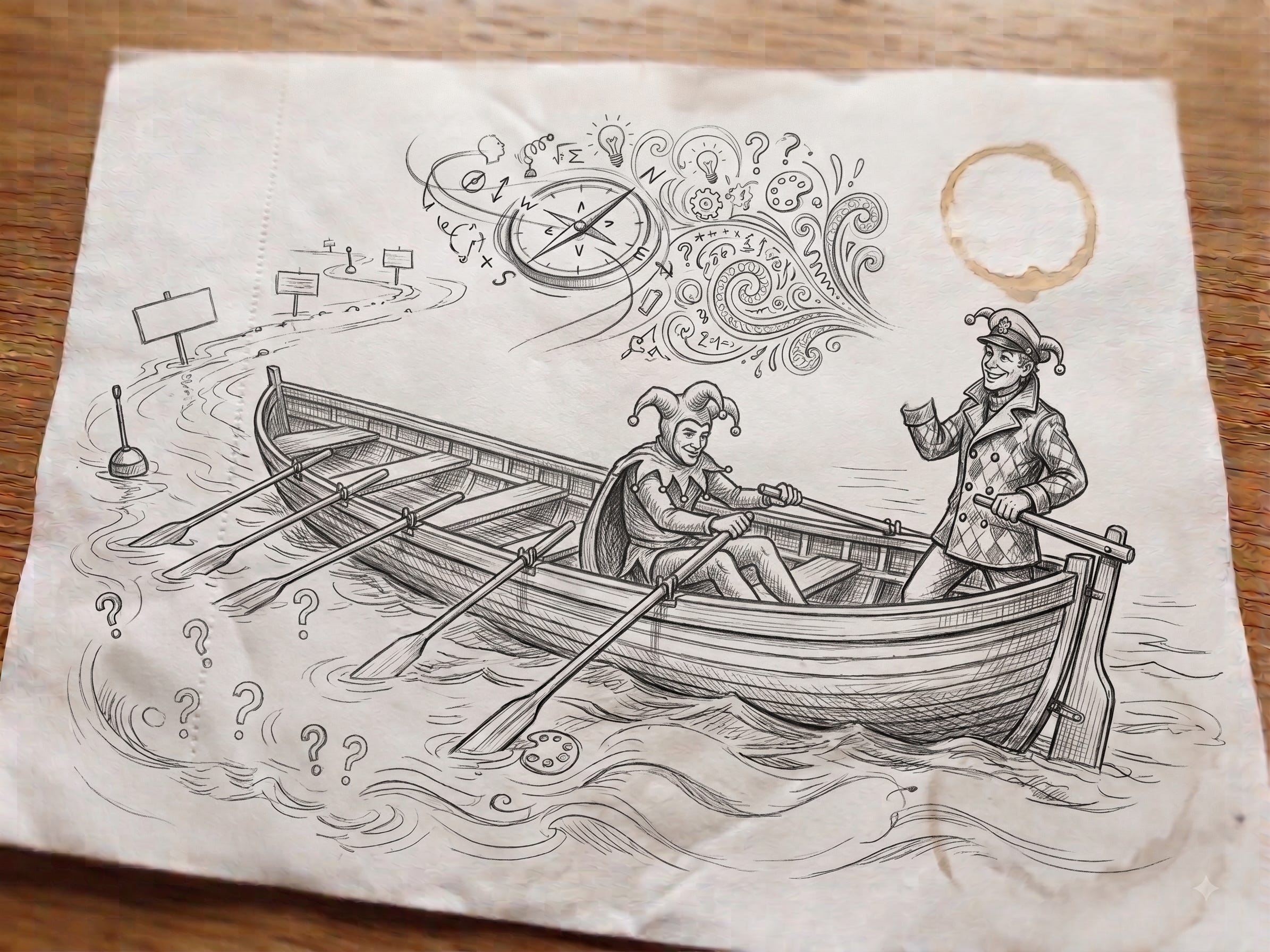
One member said I was good at making fun of myself without losing credibility. I used to call myself the court jester when everyone else was like royalty when it comes to domain knowledge.
There are many ways to design a session, and I can’t really do it justice in just one article. Again, it’s this balancing act between structure and improvisation. I feel a bit like a skipper in a rowing boat. Sometimes the boat drifts slightly off the line it should be on, so you let it go a little to the right or left. There’s momentum, and you don’t interrupt it. That’s how I visually make it work for myself.
Whether I was a skipper in a rowing boat or I was the court jester, you want to keep it real in the meeting. There’s enough digital content out there when people get together and interact in an asynchronous or synchronous moment. You want to make your in-person session as human as possible.
The “quicksand” moment of the meeting
The part you cannot put on the agenda is the quicksand moment. There’s a moment where you’re sitting in a room with 20 people, and it’s silent. Sounds like every moderator’s nightmare. It’s that awkwardness.
But flip it around, and it can actually be a valuable moment when everyone is digesting a profound thought. Could it be that conversation went off course a little bit? Or someone rambled on? There’s a collective introversion.
Seek the silence
Embrace that moment. I learned to love the silences. The diversity of the room allows you to switch perspectives and catch everyone a bit by surprise, so they don’t see the meeting running in a standard way. I have seen moderators avoid a moment of silence like the plague, and they rushed to fill it, going mechanically through the roadmap of their meeting. But then it feels like someone’s ticking boxes. The silence gets everyone’s attention.
Sometimes people don’t know each other well enough, and the session isn’t a pure peer group. I remember a session that I hosted where a quarter of the participants were APAC/China R&D leaders, a quarter were strategy heads, the rest were in different functional leadership roles, plus a couple of general managers. They weren’t a group that met in this constituency regularly and were all delegated by their CEO to attend a roundtable breakfast session on innovation that I designed, produced, and facilitated.
I couldn’t rely on the room to carry itself, because there was no shared relationship or peer-group dynamics to carry it. That is when I had to plan more interventions and stitch the meeting together by finding angles that made one person’s problem relevant to the person across the table who does a completely different job. That stitching does not so much require a skill as some planning and guts.
How did I get confident to seek the silences in this session? I had a good deck of cards (i.e. commentators that had been prepped beforehand). They were announced either in the meeting notice collateral beforehand or at the start of the session. But the trick is to keep one name up your sleeve. That is my joker card. It’s someone I know (relatively) well, whom I’ve prepped as well, but asked to stand back until I call on them.
The joker card has two uses. If the room goes quiet, I can bring that person in casually, as if it were spontaneous, and often just having them primed changes the room before I even need to play the card: someone who’s been quieter suddenly leans forward, almost as if they feel they have to save the meeting, because the more extroverted, proactive participants have stopped jumping in. Or there really is silence, and that’s when I casually bring the joker card in. They were in on the game; everyone else thinks it’s a natural intervention.
This works well in larger forums. It’s not needed in smaller peer groups, because that’s a collective resource senior enough to manage on its own. And don’t forget the flip case: if your meeting is firecrackers and going really well, you still bring that person in, because they were prepared, and you use them to make a specific point or turn the discussion.
Executive programs are not mass market products.
B2B peer group forums and executive network programmes sit right in between B2C media and bespoke consulting (see my article where I clarify it under my framework ‘the unit economics of information’).
A membership programme is not a mass market product. It is not a frozen pizza: made in a factory, shipped to the supermarket deep freeze, warmed up by whoever, however.
Remember: You’re only as a good as your last pizza
Staying with the pizzeria analogy, it's all about the experience, but the pizza remains the core part of the experience. A session is the pizza. The meeting is the meal. If on any given evening, the antipasto was amazing, the dessert a real surprise, and the ambience was brilliant, but the pizza was mediocre, then it's the weakest link that takes down the whole experience. Get obsessive about the pizza. Get obsessive about every item of your guests' evening at your restaurant. That's the same thing with executive programmes.